How we compared these Talkwalker alternatives
Talkwalker API alternative at a glance
Before digging into each option, here is how Social Fetch, Talkwalker, Sprout Social, and Data365 line up on access model, pricing, coverage, and buyer fit. Social Fetch is the only one built as a direct API with prepaid credits. Talkwalker and Sprout Social are dashboard products: Talkwalker requires a sales demo to get a price at all, while Sprout Social publishes a per-seat monthly rate. If you're specifically weighing Data365 against Social Fetch, that matchup gets its own side-by-side comparison.
| Provider | Access model | Pricing | Coverage | Best for |
|---|---|---|---|---|
| Social Fetch | REST API | PAYG from $14 / 1k credits | TikTok, Instagram, YouTube, X, Reddit, and more | Teams who want Talkwalker data as JSON |
| Talkwalker | Vendor dashboard | Custom quote only | Listening and media ingest | Comms teams who want a listening dashboard |
| Sprout Social | Vendor dashboard | $199 per seat / month | Social intelligence workspace | Social teams who want a seat-priced workspace |
| Data365 | Sales-gated API | No public list price | One network at a time | Enterprise buyers licensing per network |
1. Social Fetch
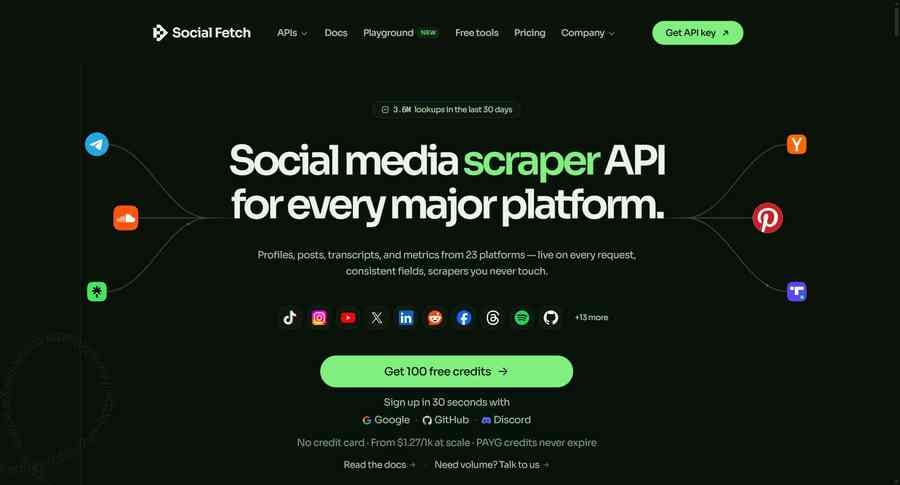
Current coverage includes TikTok, Facebook, Instagram, Pinterest, LinkedIn, YouTube, X (Twitter), Threads, Bluesky, Reddit, Rumble, Twitch, Telegram, Linktree, Amazon Shop, Spotify, Apple Music, GitHub, Google Ad Library, and generic web routes. See the docs capability matrix for the full route list.
Best for: Engineering and analytics teams who already own a warehouse or internal dashboard and want public posts as JSON instead of another listening seat. A good fit for anyone joining competitor mentions to product events or CRM rows rather than reading them in a vendor UI.
Strengths: Social Fetch is a multi-platform social and web data API, which means a single integration point can pull public posts across platforms rather than switching between separate platform APIs or a monitoring vendor's UI. Because responses come back as structured JSON, the data can feed an existing pipeline without a dashboard export. See the API docs for endpoints and a sample JSON envelope.
Limitations: Social Fetch is a raw data API, not a listening dashboard, so any visualization, alerting, or trend-charting layer has to be built by the team consuming the data. Teams migrating off Talkwalker should expect to write and maintain that layer themselves rather than inherit one out of the box.
Example fit: A growth team paying for Talkwalker seats wants competitor mentions flowing into an internal dashboard or a data warehouse table it already owns, instead of being viewed inside Talkwalker's own UI. Since Social Fetch returns data as an API response, the team can pull posts on a schedule and feed them straight into that existing pipeline without a manual export step.
Pricing: Pay-as-you-go starts at $14 for 1000 credits.
Signup includes 100 free credits and no demo.
2. Talkwalker (Lumen by Talkwalker)
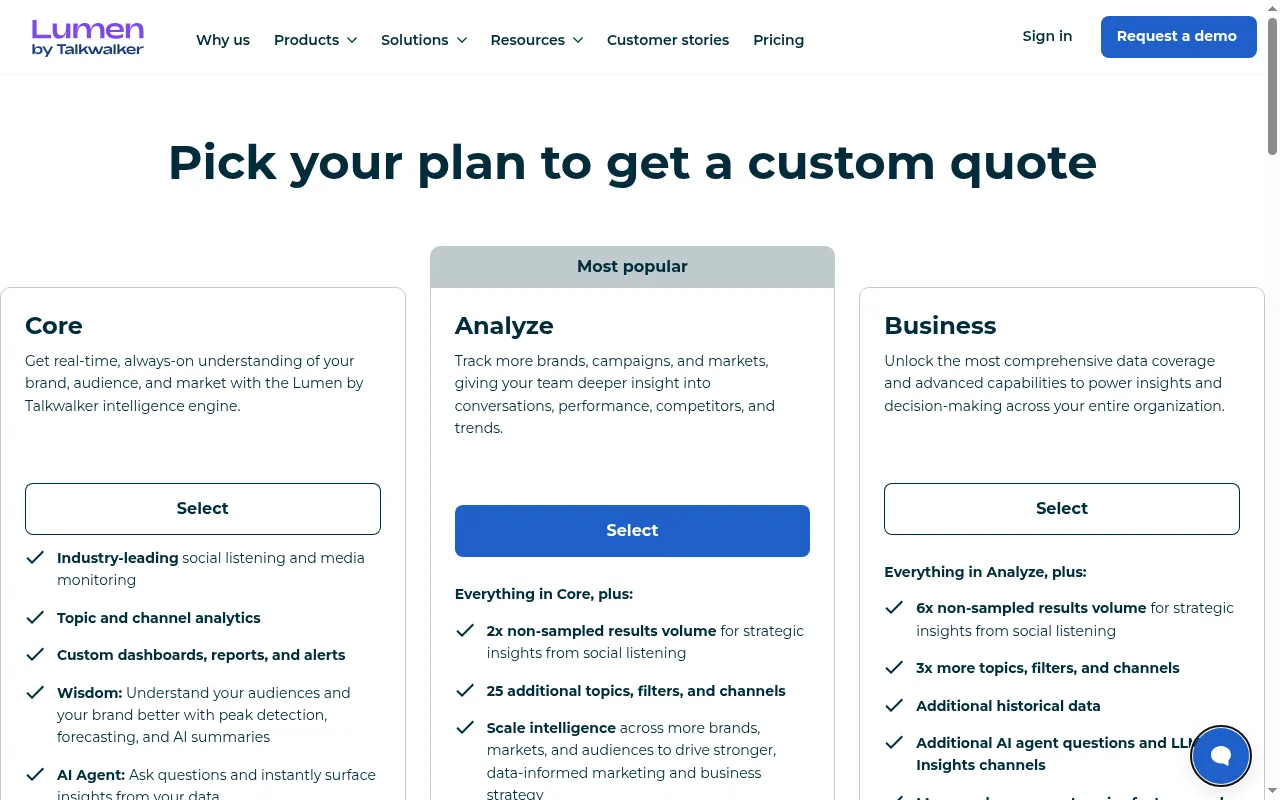
Best for: Brand, comms, and marketing teams who want a vendor-managed listening dashboard rather than a data pipeline they build themselves, and who are comfortable going through a sales process instead of a self-serve signup.
Strengths: Talkwalker documents social listening, media monitoring, and social benchmarking capabilities, which covers the core job of tracking brand and competitor mentions across public sources and comparing performance over time. The product has been renamed to Lumen by Talkwalker, but it is the same social listening and consumer intelligence platform, so teams already running on Talkwalker do not lose functionality from the rename alone.
Limitations: Talkwalker does not publish numerical list prices on its pricing page. Teams have to request a custom demo to get a quote, which means a sales cycle instead of a self-serve signup, and no way to check cost against a rate card before talking to a sales rep. There is also a naming change to track: the product is now called Lumen by Talkwalker, so teams evaluating it should confirm they are looking at current documentation rather than older Talkwalker-branded material.
Any Talkwalker data-export or API add-on is sold the same way as the dashboard: through a demo, not a public self-serve rate card. This piece does not invent enterprise minimums.
Example fit: A corporate communications team needs a shared dashboard where executives can view social benchmarking against competitors, with no internal team writing code to consume the data. Lumen by Talkwalker fits because it is built as a listening and benchmarking product for that audience, not as an API meant to feed an internal warehouse.
3. Sprout Social
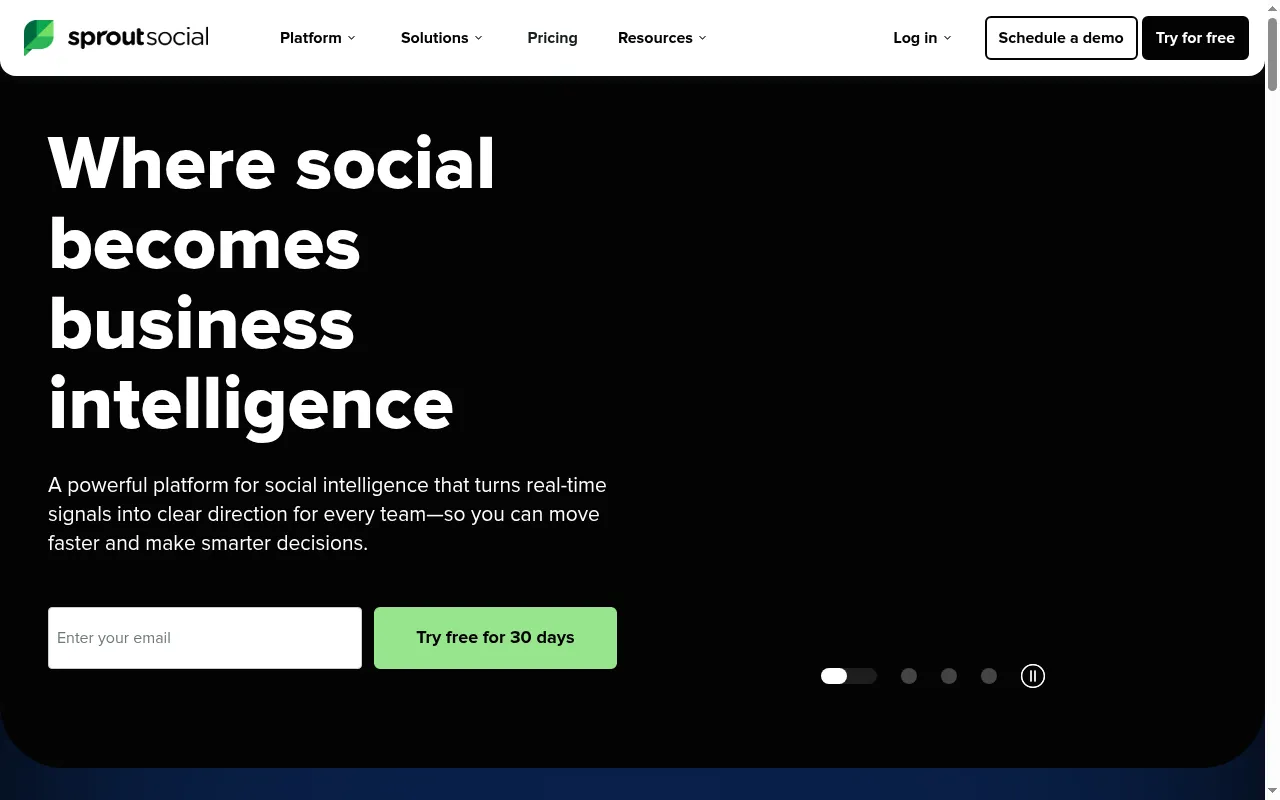
Sprout Social is on this roster because teams leaving Talkwalker often look at it first by name recognition. It is a publishing and inbox workspace with listening bolted on — it will not replace a data pipeline.
Best for: Brand, social, and community teams who want a managed social media management and intelligence platform with dashboards, workflows, and reporting built for people rather than for code, and who are comfortable paying per seat rather than per API call.
Strengths: Sprout Social is an AI-powered Social Intelligence Platform built to turn real-time signals into direction for teams, which fits organizations that want the platform itself to surface what matters rather than handing back raw records. It provides real-time analysis of conversation spikes and their drivers, which is useful for a comms or marketing team trying to understand why a mention volume jumped without digging through raw posts themselves.
Limitations: Sprout Social's Standard plan is listed at $199 per seat per month, so cost scales directly with headcount rather than with data volume. A five-person team pays for five seats regardless of how much or how little monitoring each person actually does in a given month. The platform is built around a dashboard and workflow tools for human users, not a raw data feed, so teams that want public posts landing in an internal analytics feed or a data warehouse table still have to build that export layer themselves or look elsewhere.
Example fit: A social media team of five people needs a shared dashboard to catch conversation spikes around a product launch and see what's driving them, without anyone on the team writing code to parse raw posts. Sprout Social fits because it packages that analysis into the platform UI, and the team pays for five seats rather than building a pipeline to consume an API response.
4. Data365
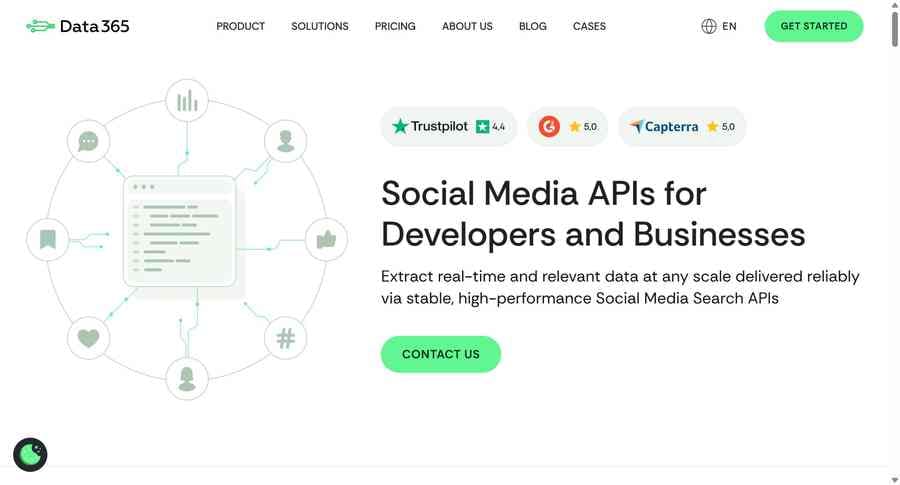
Best for: Enterprise data teams that need social data licensed on a per-network basis and that already run a formal vendor evaluation process, rather than teams wanting to sign up and start pulling data the same day.
Strengths: Data365's model is built around licensing access one social network at a time, which can suit a buyer that only wants to pay for the specific platforms it monitors rather than a single bundled integration covering networks it doesn't use.
Limitations: Data365 is a sales-gated product: there is no self-serve signup and no published rate card, so a team cannot test the API or see per-network cost before booking a demo. That means an extra step, and an extra wait, before any code gets written, which is the opposite of the point for a team trying to move fast off an existing listening contract.
Example fit: An enterprise team migrating off Talkwalker but bound by procurement rules that require a signed vendor contract instead of a credit-card signup would be the kind of buyer that ends up talking to Data365 sales, since a per-network license maps onto how its finance department wants platform costs billed separately.
How to choose the right alternative
Start with what you plan to do with the data once you have it. If you're writing code that pulls public posts into Postgres, Snowflake, or a Slack bot, you want a JSON response you can pipe straight into that pipeline, not a UI you have to export from. That points to an API-first option rather than another suite. If marketing wants a UI successor, look at Brandwatch or Meltwater. If the data needs to land in your own systems, look at an API like Social Fetch.
If instead you want a shared screen that a comms or marketing team checks without writing any code, and you're fine going through a sales conversation to get pricing, a vendor-managed listening and benchmarking platform is the better fit. You get social listening, monitoring, and benchmarking built and maintained for you, at the cost of a quote-based sales cycle instead of a self-serve signup and no published rate card to check against before that call.
The trade-off is really build versus buy. An API gives you raw records and full control over how they're stored, joined, and visualized, but you own building and maintaining any charting, alerting, or trend layer yourself. A dashboard product gives you that layer out of the box, but you're locked into whatever views and export options the vendor ships, and you're negotiating a contract instead of paying as you use it.
If your team is migrating off an existing seat-priced monitoring subscription specifically because you want the underlying posts in your own systems, the API path is the direct replacement for that job. If your team never wanted to write that integration in the first place and was already happy viewing mentions inside a monitoring UI, swapping to a differently branded UI, or one that has recently been renamed, keeps the same workflow with less disruption than moving to code.
Match the choice to who is actually going to use the output day to day. Engineers and data teams building something downstream should weight self-serve access and raw response format highest. Non-technical stakeholders who need a screen to check in on brand mentions should weight the vendor's built-in benchmarking and reporting highest, and treat the sales process as a one-time cost of getting there.
Frequently asked questions
How does Social Fetch pricing compare to Talkwalker and Sprout Social?
Talkwalker does not publish numerical list prices and directs prospective customers to request a custom demo, so there is no rate card to check before a sales call. Sprout Social publishes a Standard plan at $199 per seat per month, which scales with headcount rather than usage. Social Fetch pay-as-you-go starts at $14 for 1000 credits.
What's the difference between official platform APIs and using Social Fetch?
Official platform tools like Meta for Developers, TikTok for Developers, and YouTube for Developers are built for specific jobs on a single platform: logging users in, letting them share content, embedding a video player, or posting through TikTok's Content Posting API. They are not designed to hand back a normalized feed of public posts across platforms. Social Fetch is a multi-platform social and web data API, so a single integration covers posts from several platforms in one response schema instead of separate SDKs per network.
When should a team pick Social Fetch instead of a listening suite?
Pick Social Fetch when the goal is raw public posts in your own systems, and the team is willing to build its own charting or alerting layer. Stick with a listening suite like Talkwalker or Sprout Social when the requirement is a vendor-managed dashboard with benchmarking already built, no code written, and the team is comfortable with a sales process or per-seat pricing instead of usage-based credits.
Final recommendation
Choose Social Fetch if: you need public posts as JSON in tools you already own. Pay-as-you-go starts at $14 for 1000 credits. Signup includes 100 free credits and no demo.
Choose Talkwalker / Lumen if: you need an executive comms dashboard with listening and benchmarking already built, and you can run a sales cycle for a custom quote.
Choose Sprout Social if: you manage community workflows in a seat-based UI. Standard is listed at $199 per seat per month.
Choose Data365 if: procurement wants a signed per-network contract rather than a self-serve API key.
Start with Social Fetch's API and pull a sample of public posts before committing to a full migration off Talkwalker.

Founder of Social Fetch. Writes about social-data APIs, reliability, and the production incidents that forced better timeouts, envelopes, and billing.
Related articles
Questions about this post? Contact us.