
Apple Music data API
Public Apple Music artists, albums, and songs by catalog id or share URL — same envelope as Spotify, TikTok, and YouTube.
Teams running monitoring, research, and enrichment pipelines


Why Social Fetch
We run the Apple Music scrapers. You build the product.
Live Apple Music data as JSON — proxies, platform changes and consistent output handled for you.
Apple Music, plus every other network
One key and one response envelope for Apple Music and 24 more platforms — profiles, posts, search, comments and transcripts.
Pricing you can reason about
One request, one credit. Know how far your balance will go before you run your next batch.
Live data on every request
Fetch public data when you ask for it — not from a shared cache.
No scraper maintenance
We handle proxies, browser changes, and platform breakages.
Built for production jobs
Run concurrent workloads with explicit statuses and request IDs.
Regular jobs. Better rates.
Running lookups every month? Get lower per-credit rates with a monthly plan. For occasional projects, choose pay as you go.
What Apple Music data can you get?
4 endpoints, one API key. Every response comes back as live JSON in the same envelope.
Profiles & channels
Look up a Apple Music account by handle or URL — bio, counts and metadata.
Content
Fetch a single post or video by URL, with metrics and media.
Search & discovery
Search Apple Music by keyword, hashtag or trend.
Browse all 4 Apple Music endpoints
What teams build with Apple Music data
Monitoring, enrichment, research and content workflows on Apple Music data — the same API as every other platform.
Monitor brands and competitors
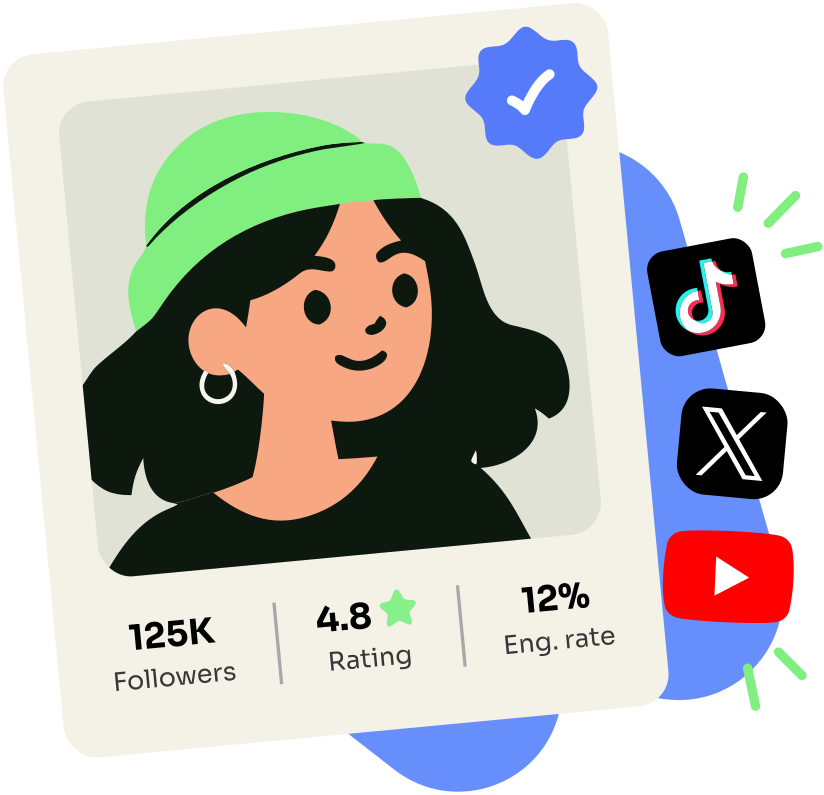
Find and vet creators
Check reach and engagement before you reach out.
Turn video into searchable text
Transcribe and index video and audio content so you can find the exact moment you need.

Track public communities
Follow the subreddits, groups, and channels where your audience talks.

How it works
Your first request in three steps.
Use TypeScript or your automation tool of choice.
Sources
+ 19 more platforms
One request
GET/v1/tiktok/profiles/
x-api-key: sk_live_••••••••
Same JSON shape
{
  "data": {
    "lookupStatus": "found",
    "profile": {
      "platform": "tiktok",
      "handle": "charlidamelio",
      "displayName": "charli d’amelio",
      "verified": true
    },
    "metrics": {
      "followers": 160263648
    }
  }
}
Step 1
Create your free account
Get an API key with 100 requests included.
Step 2
Choose an endpoint
Pass a username, URL, keyword, or post ID.
Step 3
Get clean JSON
Use the response immediately or send it into your pipeline.
Works with your stack
Code, automate, or connect your AI.
 TypeScript
 n8n
n8n- Make
- Apify
- MCP
- AI clients
Pricing
Social data, priced simply.
Start with 100 free credits. Monthly plans give you predictable volume and lower per-request rates.
Starter
18,000credits
$1.61 per 1k · $0.00161 per request
- Top up from $1.61 / 1k if you run out
- Up to 25 monitors
Growth
50,000credits
$1.58 per 1k · $0.00158 per request
- Top up from $1.58 / 1k if you run out
- 5 team seats
- Up to 100 monitors
Scale
150,000credits
$1.50 per 1k · $0.00150 per request
- Top up from $1.50 / 1k if you run out
- 25 team seats
- Up to 250 monitors
- Cancel anytime
- 30-day money-back guarantee
- Price locked while you stay
Need 1M+ credits, invoicing, or volume rates? Talk to us
Trust signals
DevHunt
Product Hunt
Uneed
Customers
Teams building on Social Fetch.
“Our TikTok and Instagram scrapers broke constantly. Social Fetch took us off that rotation — we ship product again.”
“Transcripts at volume from one endpoint. No broken scrapers for our small team to maintain.”
“Live profile data on every request. We never flag accounts from a stale cache.”
“Heavy concurrent load, no rate limits to negotiate. The rare API I haven't wrapped in retries.”
Apple Music API: common questions
Is there an Apple Music scraper API / Apple Music data API?
Yes. Social Fetch provides REST routes for public Apple Music albums and songs. Authenticate with a Social Fetch API key (x-api-key); you do not need an Apple developer account or MusicKit for this public catalog lookup.
What Apple Music data does Social Fetch cover?
Apple Music operations include GET /v1/apple-music/album and GET /v1/apple-music/track. Found album responses include identity, optional cover art, credited artists, trackCount, and an ordered tracks array. Found track responses include trackId, title, and optional duration, track number, explicit flag, artist name, album title, and URL. Exact fields are on the endpoint pages and in /docs/api.
Do I need an Apple developer account or MusicKit?
Not for Social Fetch public catalog routes. You only need a Social Fetch API key. Apple Music API with MusicKit remains the path for playback, user libraries, and subscription-scoped features.
What identifiers does the Apple Music album route accept?
Pass either an Apple Music album id (albumId, for example 1468058165) or a public https://music.apple.com/{cc}/album/…/{id} URL. One of albumId or url is required. A song URL (?i= on an album path) is not an album lookup.
How much does the Apple Music API cost on Social Fetch?
You buy credit packs (or use the 100 free signup credits). Album lookups cost 1 credit each on a successful completed request. There is no required monthly subscription for pay-as-you-go packs. Always check meta.creditsCharged.
Does HTTP 200 always mean the album was found?
No. HTTP 200 means the request finished. Check data.lookupStatus: found means you got album details; not_found means the id or URL did not resolve. Persist meta.requestId when you need to debug a miss.
Apple Music album vs Spotify album?
Both return public catalog albums in the shared Social Fetch envelope, but the schemas are not the same. Apple Music uses platform: "apple_music", free-text releaseInfo, and does not invent Spotify-only fields such as albumType or playable. Use the Apple Music route when your identifier is an Apple Music id or music.apple.com URL.
Can I use Apple Music routes from agents or MCP?
Yes. The same operations appear as typed MCP tools and can be reached via Ask (POST /v1/ask) for plain-English exploration. For production jobs, pin GET /v1/apple-music/album or GET /v1/apple-music/track so routing stays explicit.
Is scraping Apple Music data legal?
Social Fetch returns publicly visible catalog data. You are responsible for how you use it under Apple's terms, applicable law, and your own compliance review. We do not give legal advice.
The Apple Music API in detailHow the Apple Music routes work, what they cost, and how they differ from the official API.
Why teams use Social Fetch for Apple Music
Creator graphs often miss the Apple Music artist, album, or song behind a pasted music.apple.com link. Social Fetch exposes GET /v1/apple-music/artist, GET /v1/apple-music/album, and GET /v1/apple-music/track by catalog id or public URL. Every response uses { data, meta } with data.lookupStatus, meta.requestId, and meta.creditsCharged.
How to call the Apple Music API
1. Create an API key
Sign up at Social Fetch and copy a key (
sfk_…). New accounts get 100 free credits — enough to smoke-test album GETs against live catalog data.2. Call an album or track route
Send
GET /v1/apple-music/albumorGET /v1/apple-music/trackwithx-api-keyand either a catalog id or a public Apple Music URL. Use the TypeScript SDK or curl in production jobs; keep the playground for one-off checks in the app.3. Join music ids to social rows
Branch on
data.lookupStatusbefore writing. Persist the Apple Music album id on the same person or campaign record as TikTok and YouTube handles. Logmeta.requestIdfor support; bill frommeta.creditsCharged.
What each Apple Music route returns
- Artist lookups with display name, artwork, editorial notes, top songs, albums, videos, and playlists.
- Album lookups with title, cover art, credited artists, track count, and an ordered tracklist.
- Track lookups by song id, standalone song URL, or album URL with
?i={songId}. - Accept either a raw Apple Music album id or a public
music.apple.com/{cc}/album/…URL. - Free-text
releaseInfowhen the catalog publishes it — date, duration, and copyright in one string. - Same Social Fetch API key and response envelope as Spotify, TikTok, YouTube, and the rest of the marketplace.
How much does the Apple Music API cost?
The Apple Music album and track routes charge 1 credit per successful completed lookup. Credits never expire on pay-as-you-go packs. Confirm every response with meta.creditsCharged — that field is the billing source of truth.
Social Fetch vs the official Apple Music API
Apple Music API (MusicKit) is for apps with Apple developer credentials, user tokens, and playback. Social Fetch routes are public catalog enrichment: id or URL in, JSON out, no Apple developer account.
More platforms on the same key
 GitHub API
 Google API
 Hacker News API
 Linktree API
 SoundCloud API
 Spotify API
Pull your first Apple Music data.
Run a live Apple Music request in the playground. 100 free credits, no card, JSON back in seconds.
No credit cardSign up in 30 seconds withGoogleGitHub